
A vivid color is only part of the story. Estate tourmaline earrings are best assessed by considering the stones, setting, condition, and workmanship together. Tourmaline has a hardness of 7, and color may sometimes be improved through heating or irradiation, though those improvements aren’t always permanent.
It’s natural to notice a pair’s color and design first. Look closer at how the stones are secured, whether the settings suit their shape, and how well the earrings have held up. These details help you distinguish lasting craftsmanship from surface appeal.
This guide explains how to assess estate tourmaline earrings, compare design details, and spot signs of careful construction. Learn what to look for in the gemstones, settings, backs, and overall condition so you can compare pairs with greater confidence. These practical details help you appreciate an earlier piece’s character and decide whether it suits your collection.
Key Takeaways
- Compare the pair as a whole: stone color, cut, matching, and setting design all shape its character.
- Look closely at prongs, backs, and construction to judge how securely the stones are held and how carefully the earrings were made.
- Use design details to distinguish period influences, while treating style as a clue rather than proof of age.
- Assess provenance through the consistency of the earrings’ materials, workmanship, and documented history.
- Inspect for wear, repairs, and looseness before deciding whether a pair suits your collection and intended use.
Tourmaline earring buying guide
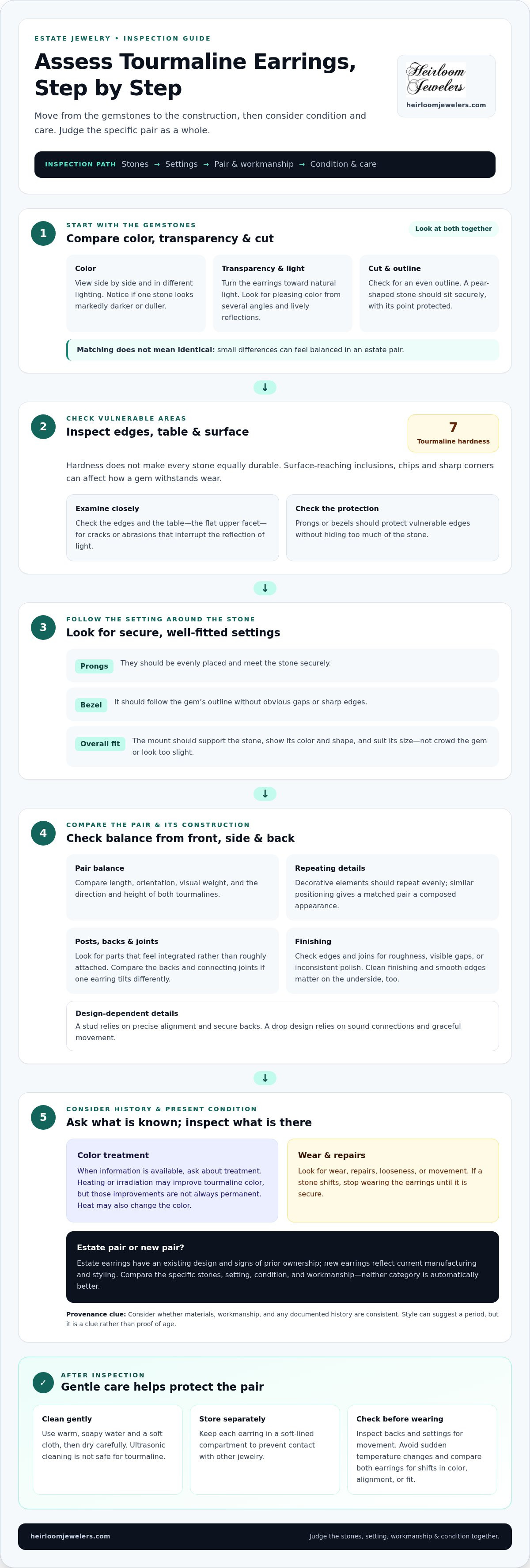
Start with the gemstones, not the setting alone. Compare each tourmaline’s color, transparency, cut, and position. In an estate design, matching stones need not look identical. Check instead that their differences feel balanced when viewed together. Turn the earrings toward natural light and see whether their color remains pleasing from several angles. A well-designed setting frames the stones without overwhelming them.
Tourmaline has a hardness of 7, but that rating doesn’t make every stone equally durable. Surface-reaching inclusions, chips, and sharp corners can affect how a gemstone withstands wear. Examine the stone’s edges and table, the flat upper facet. Look for cracks or abrasions that interrupt the reflection of light. Then check whether prongs or bezels protect vulnerable edges without hiding too much of the stone.
Use a consistent inspection sequence before deciding:
- Color: Compare the pair side by side, then view each stone under different lighting. Note whether one appears markedly darker or duller.
- Cut: Look for an even outline and lively reflections. A pear-shaped tourmaline, for example, should sit securely with its point protected.
- Setting: Check that prongs meet the stone evenly. A bezel should follow the gem’s outline without gaps or sharp edges.
- Pairing: Compare earring length, orientation, and visual weight. Small differences can suit an older piece, but an obvious imbalance may distract.
How do estate tourmaline earrings compare with new tourmaline earrings? Estate pairs have an existing design and signs of prior ownership; new pairs reflect current manufacturing and styling. Compare the stones, setting, condition, and workmanship of the specific pair rather than assuming either category is automatically better.
Ask about color treatment when information is available with the earrings. Tourmaline color can sometimes be improved by heating or irradiation, and those improvements aren’t always permanent. Heat may also change a tourmaline’s color. Treatment history can therefore inform your assessment of the stone’s appearance and care.
How should I clean, store, and care for estate tourmaline earrings? Clean them gently with warm, soapy water and a soft cloth, then dry them carefully. Ultrasonic cleaning isn’t safe for tourmaline. Use gentle cleaning methods and avoid sudden changes in temperature.
Store each earring separately in a soft-lined compartment to prevent contact with other jewelry. Before wearing the pair, inspect the backs and settings for movement. If a stone shifts, stop wearing the earrings until it’s secure. Compare both earrings to spot changes in color, alignment, or fit that may be less noticeable when viewed individually.
Tourmaline earring craftsmanship
Good craftsmanship shows in how each part works together. Examine how the tourmaline, setting, and earring structure relate to one another. A well-considered mount supports the stone while keeping its color and shape visible. Check whether the design looks balanced from the front, side, and back. The underside matters, too: clean finishing and smooth edges show attention to details hidden during ordinary wear.
Metal choice contributes to both appearance and construction. The Estate 18 Karat Tourmaline Earrings are made of 18-karat yellow gold. In a pair like this, notice how the warm metal frames the gemstone and complements its color. Look for consistent finishing across both earrings. Differences in polish or surface texture may be part of an older piece’s history, but they should be understood alongside the overall condition.
Inspect the setting closely. Prongs should be evenly placed and meet the stone securely. A bezel should follow the gem’s outline without obvious gaps. For a drop earring, examine the connection between the gemstone setting and the moving element. A jump ring or hinge should sit neatly and allow movement without looking distorted. These details affect how the piece hangs and how its components work together.
- Stone alignment: Compare the direction and height of both tourmalines. In a matched pair, similar positioning creates a composed appearance.
- Setting symmetry: Check whether decorative elements repeat evenly. Uneven spacing can make a carefully designed pattern feel unbalanced.
- Back construction: Look at the posts, closures, and connecting joints. They should appear integrated with the design, not roughly attached.
- Finishing: Inspect edges and joins for roughness, visible gaps, or inconsistent polish.
Craftsmanship also depends on proportion. A delicate setting may suit a small gemstone, while a larger stone may need a sturdier mount. The setting should neither crowd the tourmaline nor look too slight for its size. Hold the earrings upright and see how they hang. If one tilts differently, compare its post, back, and connecting joints with the other earring.
Finally, consider whether the workmanship supports the design’s purpose. A simple stud depends on precise alignment and secure backs. A drop design depends on sound connections and graceful movement. To compare these details across estate pieces, browse estate gemstone jewelry and note how each setting frames its stones.
What styles and eras are common for vintage tourmaline earrings?
Vintage tourmaline earrings come in many design styles. Color alone can’t establish an era. Shape, setting, metalwork, and construction offer more useful clues. A compact stud has a different character from a hinged drop. A halo, with smaller stones surrounding a center gem, creates another distinct effect. Compare these features before assigning a style or period.
Start by identifying the overall form. Studs keep attention near the earlobe, while drops add movement and length. Clusters arrange several stones into one decorative unit. Some dangle designs pair colored tourmaline with diamonds or contrasting gemstones. The silhouette suggests the effect of the design, whether restrained, ornamental, or dramatic.
- Studs: Examine the outline and setting. A round tourmaline in a simple mount feels different from a framed, decorative stud.
- Drops: Follow the design from the ear wire or post to the hanging element. Each connection affects the earrings’ movement and overall balance.
- Clusters: Look for a central tourmaline surrounded by accent stones. The arrangement may create a floral, geometric, or compact rosette effect.
- Matched pairs: Compare shape, color, and orientation. Older pairs may have subtle differences that contribute to their individual character.
Treat period labels as design clues, not conclusions based on color. Edwardian jewelry often features delicate ornament and diamond accents. Art Deco designs are associated with strong geometry, repeated lines, and contrasting colors. Later vintage styles may favor cleaner forms or more prominent gemstones. These broad categories can help describe a pair, but workmanship and construction matter when assessing its age.
A documented example offers context: an Edwardian green tourmaline and diamond ring is dated circa 1910. It is a ring, not an earring pair, so use it as a period reference rather than proof of an earring’s date. Compare its stated era with visible motifs, metalwork, and setting choices. A resemblance can guide further assessment, but a similar design may appear in a later piece.
For a practical comparison, note three features: silhouette, decoration, and stone arrangement. Then consider whether the pair looks symmetrical or intentionally varied. A clean geometric outline may feel architectural; a floral cluster may feel softer and more ornate. Describing these details precisely makes it easier to compare vintage styles without relying on a period label alone.
How can I authenticate estate tourmaline earrings and verify their provenance?
Authentication involves separate questions: what the stones are, how the earrings were made, and what their history supports. No single visual detail proves an exact age or ownership history. Start with the gemstones and setting, then compare your observations with any accompanying records. This keeps an impression of the period distinct from documented provenance and highlights details that may need closer examination.
A qualified gemologist can assess whether the stones are tourmaline and describe their visible characteristics. Ask for findings that identify each stone and note any treatments determined. A written report helps distinguish an informed gem identification from an informal description. It should cover the earrings examined, not just a similar pair or a loose gemstone. Match any report images and descriptions to the actual settings.
Examine the physical piece systematically:
- Record identifying details: Note the metal marks, setting design, stone shapes, and distinctive repairs or wear.
- Compare both earrings: Check whether construction, stone placement, and markings form a plausible pair.
- Review documentation: Match receipts, appraisals, and prior descriptions to the earrings’ specific features.
- Separate observation from conclusion: Describe a floral motif as a design feature, not proof of a particular period.
Provenance is the documented history of ownership or origin. Useful records may include dated receipts, estate inventories, prior appraisals, or family records naming the piece. Check that descriptions of the metal, gemstones, and design are consistent. For example, a record describing emeralds does not support a tourmaline identification without further explanation. Keep original paperwork together and preserve clear photographs of distinguishing details.
Metal marks can support an assessment, but they don’t establish a complete history on their own. Compare a mark’s placement and style with the setting’s construction. A mismatch may indicate a later component or alteration. An old-fashioned design alone doesn’t prove the earrings are old. Date claims should align with documented history and physical evidence, not style alone.
For estate tourmaline earrings, request a clear description of what was examined and what the documents establish. Separate confirmed details, such as an observed metal mark, from conclusions about ownership or date. If records conflict, keep both versions and compare their specific wording. This careful recordkeeping helps distinguish identification, condition, treatment information, and provenance.
What should I check when inspecting the condition of estate earrings?
Inspect each earring under bright, even light before judging its condition. Start with the tourmaline’s face, then examine its edges and underside. Look for chips, scratches, cloudy areas, or fractures on the stone’s surface. Rotate the pair slowly to spot damage that may disappear from a straight-on view. Compare both stones, since one may show more wear than the other.
Next, examine the metal around each gemstone. Prongs should meet the stones cleanly, without visible gaps or bent tips. A bezel should sit close to the gem’s outline. Check for thinning metal, deep dents, worn edges, and discoloration near joins. A small age-related mark differs from damage that affects how the setting holds its stone. Also inspect where the post meets the setting.
Use this inspection sequence to make observations consistent:
- Stone surfaces: Tilt each tourmaline and watch for chips, scratches, or uneven reflections.
- Settings: Check prongs, bezels, and surrounding metal for looseness or distortion.
- Posts and backs: Look for bending, worn threads, or closures that no longer sit securely.
- Pairing: Compare the earrings’ height, orientation, and visible wear side by side.
Posts and closures matter because they affect fit and security. Place each earring on a flat surface and compare the post angles. A bent post may make one sit differently against the ear. Check that friction backs fit firmly and screw backs engage smoothly. Don’t force a stiff or misaligned closure. Note any mismatch between the backs and earrings.
Look for signs of previous repair. Solder seams, replacement posts, mismatched backs, and differences in surface finish can indicate later work. These details don’t automatically make a pair unsuitable, but they belong in an honest condition assessment. Note where repairs appear and whether they affect symmetry or wear. For example, a replacement post may change how an earring hangs, even if the gemstone is undamaged.
Distinguish cosmetic wear from structural concerns. Light surface marks may affect appearance, while a loose stone, cracked setting, or failing closure affects wearability. Don’t test a stone by pushing or pulling it. Instead, handle the earrings gently and observe whether it moves and whether the setting looks intact. Photograph distinctive marks and repairs, then compare both earrings under the same lighting.
Use these inspection notes to explore estate jewelry with a clearer sense of condition, construction, and visible wear.
Heirloom Jewelers: Lugano Emerald & Diamond Necklace 18K White Gold
Heirloom Jewelers offers the Lugano Emerald & Diamond Necklace 18K White Gold for buyers drawn to estate jewelry with distinctive gemstones and considered settings. After assessing tourmaline earrings, comparing another gemstone piece can help clarify the colors, metalwork, and designs you value. The Estate Peridot & Quartz Dangle Earrings 14K Yellow Gold offer a separate example of estate earrings featuring colored stones and a dangle silhouette. Each piece has its own character, so focus on its materials and design rather than expecting it to match a tourmaline pair.
If you’re ready to explore estate and vintage jewelry, contact Heirloom Jewelers for a closer look at its offerings.
Choose a Piece That Feels Right for Your Collection
Choosing estate tourmaline earrings is also a chance to define what you value in jewelry: a distinctive color, a graceful silhouette, or the character of an earlier design. Let that preference guide your next step. Heirloom Jewelers’ offerings include the Lugano Emerald & Diamond Necklace 18K White Gold, Vintage White Gold Old European Cut Diamond Stud Earrings, and Vintage Platinum 0.5 Carat Diamond Engagement Ring. Each offers a different way to appreciate gemstone color, setting, and vintage character. Consider which details feel most personal, then explore pieces at a measured pace. A thoughtful choice can become part of your collection for years to come. Contact Heirloom Jewelers to continue exploring estate and vintage fine jewelry. Your next favorite piece may be the one whose craftsmanship and character speak quietly, yet unmistakably, to you.
Frequently Asked Questions
What are estate tourmaline earrings?
Estate tourmaline earrings are pre-owned earrings set with tourmaline gemstones. “Estate” describes prior ownership, while “vintage” usually refers to age or design period; the terms can overlap. A pair may be studs, drops, or another style, with precious-metal settings and accent stones. Tourmaline earrings can vary in silhouette, metalwork, and decoration. The estate label alone doesn’t establish a specific era, treatment, or provenance.
How can I tell if tourmaline earrings are natural or treated?
A gemological examination can help identify tourmaline and assess detectable treatments. Ask whether a report identifies the stones as natural and addresses treatment, then check that its description matches the earrings. Appearance alone can’t reliably establish treatment history. Keep any report with the jewelry’s records: a report describing a loose or different stone doesn’t establish the characteristics of the stones in your pair.
What is the typical price range for estate tourmaline earrings in the United States?
There’s no single reliable price range for estate tourmaline earrings across the United States. Value depends on the stones’ quality and size, the metal and setting, craftsmanship, condition, and documented history. For a useful comparison, consider pairs with similar materials and design features. A listing with different gemstone details or a substantially different setting may not be a meaningful comparison.
Which factors affect the value of vintage tourmaline earrings?
Value reflects the stones, materials, design, condition, and evidence supporting the earrings’ history. Appealing color and well-matched gemstones can strengthen the presentation of estate tourmaline earrings. Precious-metal content and diamond or other gemstone accents also contribute. Original matching components may make a pair feel more cohesive, while replacement parts or alterations can affect its appeal. Documentation adds context when it corresponds to the specific earrings.