
Small diamonds can create a broad shimmer, but carat weight alone doesn’t establish an estate ring’s value. Estate pave diamond rings are previously owned rings with small diamonds set closely together. “Estate” refers to prior ownership, while “vintage” and “antique” describe a ring’s age or period. Old European cut diamonds bring a distinctive look, and their contribution to price depends on more than cut alone.
It’s easy to focus on sparkle or a carat figure when comparing rings. For a clearer comparison, separate the total weight of the small diamonds from the weight of any center stone, then consider the setting, condition, craftsmanship, and metal. This guide explains how antique, vintage, and estate labels differ, how carat weight and Old European cuts relate to price, and which details to compare when assessing a ring. You’ll have a more considered way to recognize a piece’s character and understand the factors behind its value.
Key Takeaways
- Read age labels as clues to a ring’s history, then consider its design and construction to understand its period.
- Compare diamond weights on the same basis, separating the combined weight of accent stones from any center diamond.
- Assess price by looking at the whole ring, including diamond quality, setting, craftsmanship, and condition, rather than relying on carat weight alone.
- Notice how Old European cut diamonds shape a ring’s character, and compare their proportions and appearance with the style you prefer.
Differences between antique, vintage, and estate rings
These labels describe different things: age, design period, and ownership history. An estate ring, for example, can be modern, vintage, or antique, so read the description and examine the piece itself.
Antique Ring Characteristics
“Antique” describes an older ring, while “estate” means it was previously owned. Antique examples may show hand-finished details, period-specific settings, and wear consistent with age. Check the shank, prongs, and pavé stones for looseness, thinning, or signs of replacement work. To assess whether the ring fits its stated period, compare its construction and diamond cuts with the description, and review any documentation or appraisal covering its materials and condition.
Vintage Ring Characteristics
“Vintage” identifies a ring associated with an earlier design period; the label alone doesn’t establish its precise age. Older hand-cut diamonds often have imperfect symmetry, taller crowns, smaller tables, visible culets, and broader sparkle. These features can help distinguish them from modern cuts. Listings may state the weight of a center stone or the combined weight of smaller diamonds, so check what each carat figure measures.
To assess pavé quality, look for an even pattern and stones that sit securely in their settings. Review an appraisal or written description for details about the diamonds and metal; not every ring comes with a grading report. Prices depend on the stones, setting, workmanship, condition, and documented history, so no single price range applies to every vintage ring.
Estate Engagement Ring Styles
Modern estate engagement rings combine prior ownership with contemporary design, while vintage estate rings retain details from an earlier period. Compare the profile, setting height, metal, and relationship between the center stone and pavé band. Estate jewelers are one place to explore rings with a previous ownership history. Before buying, review the seller’s written return and warranty terms, since policies differ.
Common pavé concerns include loose or missing stones and worn prongs. Repairs may involve resetting stones or rebuilding worn setting details. For care, use a soft brush and gentle cleaning, and avoid pulling or scrubbing the small stones. Written terms and consumer protections depend on the seller and applicable state rules, so keep the listing and receipt.
Diamond carat weights
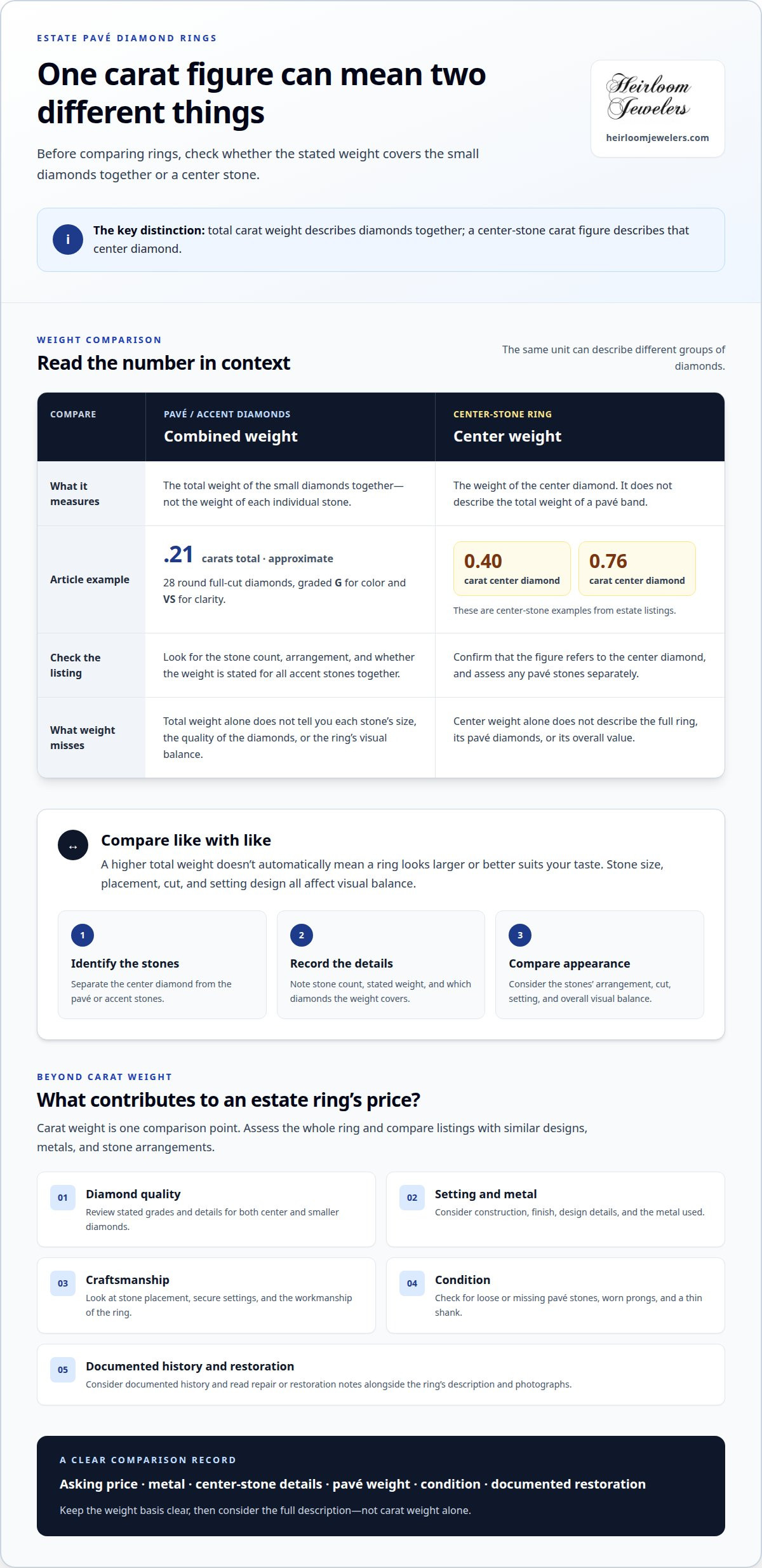
Carat weight helps describe a diamond, but it doesn’t show the full visual effect. In a pavé ring, small stones can create an even field of sparkle without a single large center diamond. Compare the stated total weight with the number and arrangement of stones. Total weight describes the diamonds together, not the size of each individual stone.
For example, one ring has 28 round full-cut diamonds with an approximate total weight of .21 carats. Those diamonds are graded G and VS. The figures describe different qualities: total carat weight accounts for the combined stones, while G and VS describe color and clarity grades. Read each detail separately, rather than treating the total as a measure of every stone’s quality.
Center-stone rings use a different comparison. Estate listings include examples described as weighing 0.40 carat and 0.76 carat. Those figures identify the center diamond’s weight in those examples, not the total weight of a pavé band. Before comparing two listings, note whether each number refers to the center stone or all diamonds combined.
For a practical comparison, record the stone count, stated weight, and which stones that weight covers. Then compare the setting and the diamonds’ appearance. A higher total weight doesn’t automatically mean a ring looks larger or better suits your taste. Stone size, placement, cut, and setting design all affect the visual balance.
Carat weight doesn’t determine price by itself. Diamond quality, setting condition, metal, craftsmanship, and the ring’s history all contribute to its value. Use weight as one comparison point, then consider the full description. This helps distinguish a pavé band with many small stones from an engagement ring built around a larger center diamond.
Estate ring prices
An estate ring’s price reflects its diamonds, setting, metal, condition, and documented history. For a pavé band, examine the small stones and their settings, not just the total carat weight. A ring with a center diamond also needs a separate assessment of that stone. These details help explain why two rings with similar silhouettes can have different asking prices.
Compare like with like. Start with rings that share a similar design, metal, and stone arrangement. Then compare each listing’s stated diamond grades, total weight, and condition. A description that gives only total carat weight leaves important questions about stone quality and distribution unanswered. Treat missing details as limits on what the listing can tell you, not as evidence of a particular value.
Condition affects a piece’s practical value. Loose pavé stones, worn prongs, or a thin shank may need attention after purchase, while a well-preserved setting may retain more of its original workmanship. Read repair notes alongside photographs, and assess whether visible wear affects the ring’s structure or appearance. Restoration can preserve a historic design, but it should also be part of the ring’s record.
Metal and workmanship matter, too. Compare the setting’s construction, finish, and design details rather than treating all gold or platinum rings as equivalent. A carefully made pavé surface requires close stone placement and secure settings. An intricate period design may appeal for its craftsmanship, while a simpler band may suit someone who prefers understated wear. These differences shape how buyers assess the whole piece.
Before deciding, make a short comparison record: note the asking price, metal, center-stone details, pavé weight, condition, and any documented restoration. Keep the seller’s description with the listing photographs. If an appraisal accompanies the ring, compare its stated characteristics with the listing. An appraisal describes an assessment; it doesn’t replace your own review of design, condition, and fit.
Old European cut diamond rings
Old European cut diamonds bring distinctive period character to estate rings. Their rounded outline and broad facets create a different appearance from modern brilliant cuts. Examine the diamond face-up, then view it from the side. The crown, table, and culet shape its profile and influence how light moves through the stone. In a pavé design, compare the center diamond’s character with the smaller stones beside it.
Cut names matter. An Old European cut is not the same as an Old Mine cut, even though both can appear in antique and vintage jewelry. The Art Deco Old Mine Cut Diamond Engagement Ring named Malaga is dated circa 1920. That example illustrates why a listing’s exact cut description deserves attention. Don’t assume an older ring has an Old European cut simply because its design appears period-inspired.
Weight is another point to read carefully. Malaga is described as weighing 0.40 carat, but that figure belongs to an Old Mine cut example, not an Old European diamond. For any listing, establish whether the stated carat weight describes the center stone or all diamonds together. Then consider how the stone’s proportions and setting affect its visible presence.
Price depends on the complete ring, not the cut name alone. Compare the diamond’s condition, stated weight, setting, metal, and craftsmanship. A pavé band can frame an Old European center without competing with its broad facets. Examine the surrounding stones and prongs closely: a loose accent stone affects the ring’s condition regardless of the center diamond’s cut.
When reviewing an Old European design, compare photographs from several angles and read the written description alongside them. Look for agreement between the named cut, the center stone’s profile, and the setting. To explore jewelry featuring this distinctive cut, view Old European cut jewelry.
Heirloom Jewelers: Lugano Emerald & Diamond Necklace 18K White Gold
Heirloom Jewelers offers a curated selection of estate and vintage fine jewelry for readers drawn to history, distinctive cuts, and enduring settings. Its Vintage White Gold Old European Cut Diamond Stud Earrings offer a way to appreciate this historic diamond style beyond engagement rings. For a ring example, the Vintage Platinum 0.5 Carat Diamond Engagement Ring connects vintage character with a platinum setting.
These pieces can help you compare how cut, metal, and design shape a jewel’s appearance. The Estate Peridot & Quartz Dangle Earrings 14K Yellow Gold and Lugano Emerald & Diamond Necklace 18K White Gold show other expressions of estate jewelry. Explore the pieces that best match your interest in craftsmanship and period character. Contact Heirloom Jewelers to discuss its estate and vintage jewelry.
Choose a ring that feels right for its next chapter
Choosing among estate pave diamond rings is also a choice about the details you want to live with. Consider whether you’re drawn to a quiet band, an ornate setting, or a design with a strong center stone. Think about how the ring’s proportions feel on your hand and which details you’ll continue to appreciate. A thoughtful choice needn’t follow a trend; it can reflect your taste and the history you value.
Give yourself room to compare pieces at your own pace. Focus on the design that feels most natural, then use the listing details to understand what you’re considering. That balance between personal response and careful evaluation can make the decision feel clearer. When you’re ready to take the next step, explore estate jewelry with Heirloom Jewelers. The right ring can carry its history forward while becoming part of your own.
Frequently Asked Questions
What is an estate pavé diamond ring?
An estate pavé diamond ring is a previously owned ring with small diamonds set close together along part of its surface. “Estate” describes ownership history, not a specific age or design period. For example, a pre-owned ring with a row of small diamonds along its band fits the description, whether its style is contemporary or period-inspired.
How much do estate pavé diamond rings cost?
The price depends on the complete ring, so there isn’t one useful figure for every estate pavé design. For a specific listing, compare the stated center-stone details, accent diamonds, metal, condition, and any documented restoration. Make sure the quoted carat weight refers to the same stones you’re comparing. A clear description helps explain what contributes to that particular asking price.
How do estate pavé rings compare with new pavé diamond rings?
Estate pavé rings have a prior ownership history, while new pavé rings are newly made for sale. That distinction may matter if you value a piece’s existing character or want to explore designs from different periods. New designs may suit someone focused on current styles. Compare each ring’s appearance, construction, condition, and documentation rather than assuming either category is automatically the better choice.
What return, warranty, and consumer protection policies apply to estate jewelry purchases?
Review the seller’s written return and warranty terms before purchase, since policies differ. Consumer protections depend on the seller and applicable state rules; keep the listing and receipt.