
Estate cluster rings can often be resized, but the setting’s construction and condition matter as much as the size change. A ring with a sound shank and secure stones may be a better candidate than one with worn metal, intricate shoulders, or fragile settings.
It’s understandable to want a comfortable fit without compromising a piece’s history or craftsmanship. This guide explains how age labels are used, what to inspect before resizing, and how gemstones and setting styles affect the decision. You’ll also learn which clues can help you assess a ring’s era and condition, so you can approach resizing with clearer expectations.
Key Takeaways
- Resizing may be possible, but the shank, setting, and condition affect how safely a ring can be altered.
- Use design details, gemstone cuts, settings, and hallmarks together to build a more reliable picture of a ring’s age.
- Look for worn metal, loose stones, and signs of earlier repairs when assessing craftsmanship and restoration needs.
- Consider gemstone durability and setting style when deciding how a cluster ring may suit regular wear.
Can antique and vintage rings be resized?
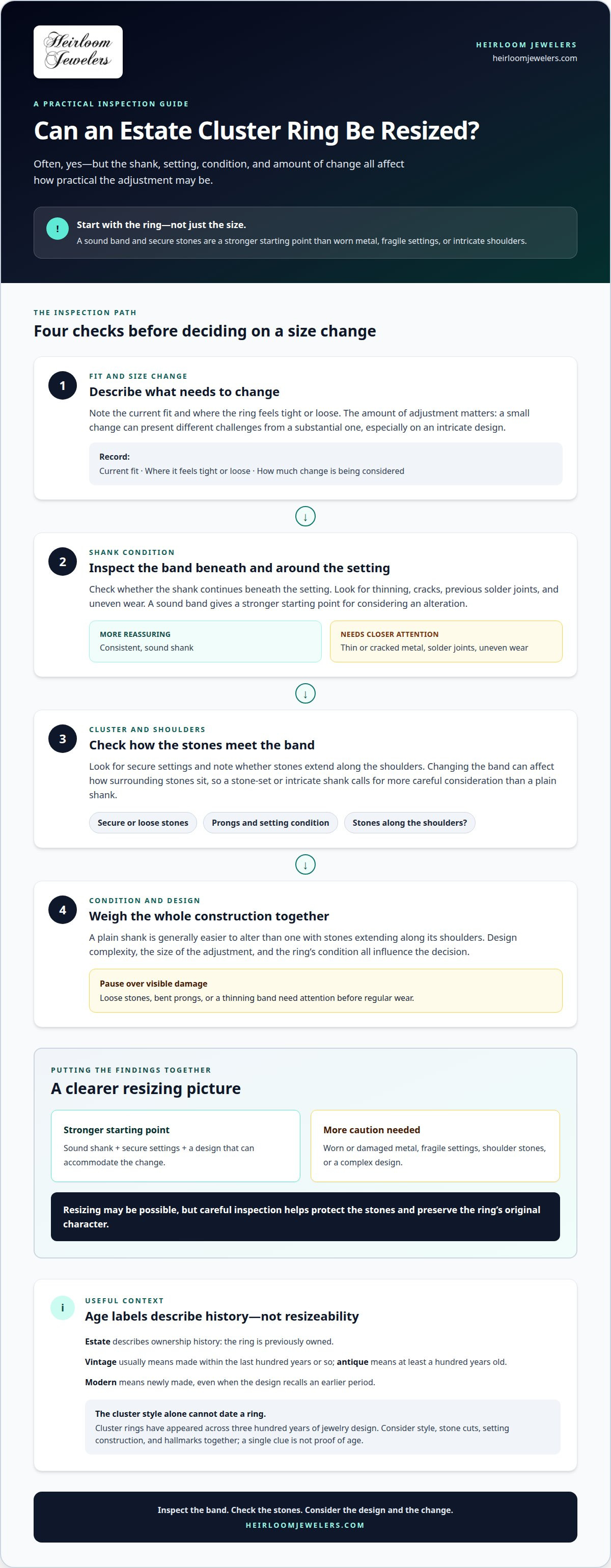
Often, yes, but the ring’s construction determines whether resizing is practical. A plain shank is generally easier to alter than one with stones extending along its shoulders. Cluster settings need careful handling because changing the band can affect how the surrounding stones sit. Before choosing a size adjustment, inspect the shank for thinning, cracks, previous solder joints, and uneven wear. A sound band and secure settings provide a stronger starting point. The amount of change and the design’s complexity also matter.
Estate cluster rings are previously owned and may be antique, vintage, or newer. Vintage usually means made within the last hundred years or so, while an antique ring is at least a hundred years old. Modern rings are newly made, even when their designs recall historic periods. These terms describe different things: estate refers to ownership history, while vintage and antique describe age. Cluster rings have appeared across three hundred years of jewelry design, so the cluster style alone cannot establish a ring’s date.
Design details offer useful clues. Victorian rings may feature rich, varied motifs, while Edwardian examples often show delicate metalwork and diamond clusters. Art Deco designs are associated with geometric forms and carefully arranged stones. These are stylistic indicators, not proof of age. Examine the whole ring: stone cuts, setting construction, metalwork, and hallmarks can support a more informed assessment. A diamond cluster may use individual settings around a center stone or arrange stones in a balanced floral or geometric pattern. Repairs and later alterations can also change a ring’s appearance.
In the United States, estate-jewelry retailers offer authentic pre-owned cluster rings. Look for clear details about age, materials, condition, and supporting authentication. To assess resizing, note the current fit and where the ring feels tight or loose. Then check whether the shank continues beneath the setting and whether shoulder stones could be affected. A small adjustment may present different challenges from a substantial change, particularly on an intricate design. Careful inspection helps protect the stones and preserve the ring’s original character.
Dating rings by style, cuts, settings and hallmarks
Dating a ring works best when design, gemstone cuts, construction, and hallmarks are considered together. One feature can suggest an era, but several clues create a stronger picture.
Style Clues for Dating Rings
Start with the overall silhouette, then compare its details with recognizable period styles. Victorian designs may use expressive motifs, while Edwardian rings often emphasize fine metalwork and balanced clusters. Art Deco pieces commonly show geometric arrangements and strong symmetry. These descriptions help narrow the possibilities, but styles can be revived later. The ring’s proportions, ornament, and craftsmanship should support the same interpretation rather than relying on a single decorative feature.
Cuts and Setting Details
Look closely at each stone’s outline and facets. An old mine cut diamond has a different appearance from a modern brilliant cut, while rose cuts have a flatter profile and a faceted dome. A Victorian solitaire listed as circa 1860 features a 0.35-carat old mine cut diamond. Georgian cluster rings can combine old mine cuts with rose cuts. Compare the stones’ shapes, spacing, and setting methods as a group.
Next, inspect how the stones meet the metal. Hand-finished details, uneven spacing, or a distinctive gallery can offer clues, but repairs may alter the original construction. Note whether the cluster uses claws, bezels, or shared settings, then compare those features with the ring’s overall design.
Hallmarks offer a separate line of evidence. Examine the inside of the shank for marks indicating metal fineness, a maker, or an assay office. Record each symbol before interpreting it, since worn or partial marks can be difficult to read. Check whether the hallmark’s placement and metal description fit the design. A mismatch may point to a later alteration, replacement shank, or mixed-period components, rather than one original date.
For a careful assessment, photograph the ring from above, the side, and inside the band. Document the stone cuts, setting details, metal marks, and any visible repairs. Then consider how those clues fit together. A Victorian motif paired with a later replacement shank, for example, may indicate an older head with subsequent work, not a ring that is entirely original to one period.
Craftsmanship, condition, and restoration
Inspect a cluster ring in good light before judging its craftsmanship. Look for even stone alignment, secure prongs, and a shank with consistent thickness. Check the underside for cracks, worn metal, or rough solder joints. A yellow-gold band with a newer-looking head may indicate components were altered at different times. These details reveal condition and help distinguish careful restoration from damage. Estate cluster rings with mixed-period parts need close attention to each component.
Before buying online, review clear photographs of the face, sides, and inside of the band. Read the description for metal, gemstones, condition, and disclosed repairs. Compare those details with the images, especially around prongs and the shank, where wear can be easy to miss. For online listings of Estate cluster rings, check whether replaced stones or altered settings are identified.
Restoration should preserve a ring’s character while addressing practical concerns. A loose stone, bent prong, or thinning band needs attention before regular wear. Replacing a missing stone with a close match can retain the original arrangement, while extensive rebuilding may change the design. Keep repair records and note which components remain original. This history helps distinguish later work from earlier craftsmanship.
For routine care, remove surface residue with a soft cloth and avoid harsh cleaners until the gemstones and setting are understood. Cluster settings contain multiple small stones, so residue between them can obscure detail. A seller recommends having vintage and antique jewelry checked and cleaned every six months. Between inspections, look for a loose stone or snagging prong before wearing the ring again.
To insure a ring, keep purchase records, photographs, and written details about its metal and gemstones. Provide the insurer with any requested documentation, and update your records after restoration. Store the ring separately from harder jewelry to reduce scratches and contact between stones. These steps help preserve evidence of its craftsmanship and provide a clear record of its condition over time.
Materials and gemstones in cluster rings
To assess authenticity and gemstone quality, compare the ring’s metal marks, construction, and written description with its visible features. For a diamond cluster, examine each stone’s cut, color, clarity, and condition, rather than judging by the center stone or overall sparkle alone.
Metal affects appearance and can offer useful identification clues. Yellow gold creates a warm contrast with diamonds, while platinum and white gold give a cooler look. An example is an 18-karat yellow gold cluster ring set with 17 round brilliant-cut diamonds. Its documented metal and stone count provide details to compare against the piece itself. Inspect the shank and setting for consistent metalwork, repairs, or replaced components.
Gemstones differ in appearance and durability. Diamonds, sapphires, and rubies are among the hardest-wearing gemstones used in antique rings. That can make them practical choices for regular wear, though the setting’s condition still matters. Softer or more delicate stones call for thoughtful handling. In a cluster, inspect every gem for chips, abrasions, and secure placement, including smaller stones around the center.
Diamond descriptions should identify more than the total number of stones. Look for the cut, color, and clarity stated for each group, and compare those details with the ring’s appearance. For example, one estate cluster is described as having J-K-L color and SI clarity diamonds. These terms provide a clearer basis for understanding the stones than a broad label such as “diamond cluster.”
Review hallmarks and any accompanying records alongside the setting. A mark can support the stated metal fineness, but the ring’s other details should also align. Note whether the stone arrangement appears uniform, whether individual gems match in color and size, and whether repairs are disclosed. Keep photographs and written descriptions together. These records make it easier to track the ring’s materials and any changes over time.
Heirloom Jewelers: Lugano Emerald & Diamond Necklace 18K White Gold
Heirloom Jewelers offers the Lugano Emerald & Diamond Necklace 18K White Gold as part of its authenticated estate jewelry selection. If you’re comparing materials, gemstones, and period character, its vintage and estate pieces offer examples of how those details shape a piece’s appeal.
The collection also includes Vintage White Gold Old European Cut Diamond Stud Earrings, a Vintage Platinum 0.5 Carat Diamond Engagement Ring, and Estate Peridot & Quartz Dangle Earrings 14K Yellow Gold. These pieces show the range of metals and gemstones found in pre-owned fine jewelry. They may help you clarify which qualities matter most as you consider an estate piece.
For a closer look at Heirloom Jewelers’ estate and vintage jewelry, please get in touch.
Choose a Ring That Feels Right for Your Story
The next step is to decide what you want the ring to mean in daily life. Is it a piece to wear often, a family keepsake, or an addition to a collection? Your answer can guide choices about comfort, visual presence, and how much original character matters to you. Estate cluster rings carry individual histories, but the right choice should also feel natural in your life.
Before settling on a ring, write down the qualities you value most. You might prioritize a particular gemstone, a period look, or a setting that suits your routine. A short list can focus your comparisons and keep a striking detail from overshadowing practical considerations.
If you’d like to discuss what matters in an estate or vintage piece, contact Heirloom Jewelers for ring advice. A thoughtful choice can honor the past while becoming part of your story.
Frequently Asked Questions
How can I tell how old a ring is?
Estimate a ring’s age by combining physical evidence with its documented history. Look for dated receipts, inheritance records, or earlier photographs showing the same design. Compare those records with the ring’s construction and marks. A single clue can be misleading: a band may have been replaced, or a style may have been revived. Keep photographs and paperwork together to preserve useful evidence.
What determines the price?
Price reflects the ring’s materials, gemstones, craftsmanship, and condition. A cluster with well-matched stones may differ in value from one with replacements or visible damage. The maker, documented origin, and appeal of its period design can also shape buyer interest. Compare the complete piece rather than judging by the center stone alone, since the smaller stones and setting contribute to its overall character.
How can you identify the age and style of an estate cluster ring?
Separate the style description from evidence of the ring’s actual age. Note the silhouette, ornament, and arrangement of stones, then compare those features with documented period examples. Record any marks and photograph details before researching them. If the band and setting appear to belong to different design periods, describe them separately. That distinction can reveal a later alteration without treating the entire ring as one original design.
What gemstones and metals are commonly used in estate cluster rings?
Diamonds, sapphires, and rubies appear in antique cluster designs, set in metals such as gold, platinum, or silver. Gold may be yellow or white, and mixed-metal construction also occurs. Examine each gemstone’s color and transparency under consistent light. A cluster can pair stones of different cuts or hues, so compare each gem individually rather than assuming every stone matches the center.
How much do estate cluster rings cost in the United States?
In the United States, the amount depends on the ring’s materials, gemstone quality, condition, provenance, and demand for its design. A piece with a sought-after stone or documented maker may be valued differently from a similar-looking ring without those attributes. Compare like with like: gemstone type, total stone weight, metal, and disclosed restoration all affect how useful a price comparison will be.
What factors affect the value of an estate cluster ring?
Value reflects the combined appeal of the stones, workmanship, originality, and supporting records. A complete ring with its original design details may attract different interest from one with substantial later changes. Maker attribution and a clear ownership history can add context for collectors. Consider wearability too: a beautiful design may be less practical if its settings need attention before regular use.